MARS & BEYOND
THE ROAD TO MAKING HUMANITY MULTIPLANETARY
“You want to wake up in the morning and think the future is going to be great - and that’s what being a spacefaring civilization is all about. It’s about believing in the future and thinking that the future will be better than the past. And I can’t think of anything more exciting than going out there and being among the stars.”
-Elon Musk
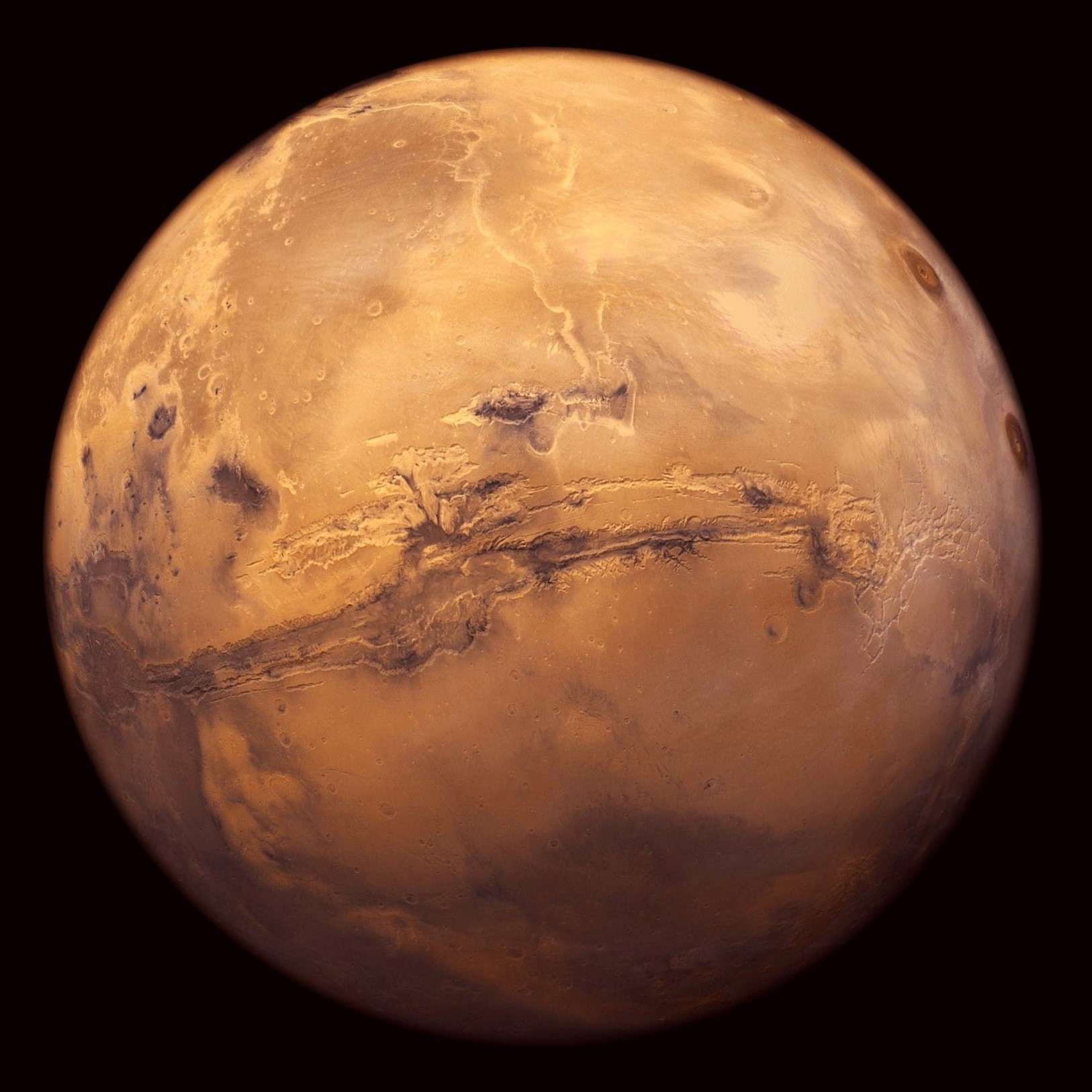
WHY MARS?
At an average distance of 140 million miles, Mars is one of Earth's closest habitable neighbors. Mars is about half again as far from the Sun as Earth is, so it still has decent sunlight. It is a little cold, but we can warm it up. Its atmosphere is primarily CO2 with some nitrogen and argon and a few other trace elements, which means that we can grow plants on Mars just by compressing the atmosphere. Gravity on Mars is about 38% of that of Earth, so you would be able to lift heavy things and bound around. Furthermore, the day is remarkably close to that of Earth.
Diameter :
6,791 km / 4,220 mi
Day Length :
24 hrs 37 min
Avg Distance from Earth :
225Mkm / 140Mmi
LANDING ON MARS
Starship will enter Mars’ atmosphere at 7.5 kilometers per second and decelerate aerodynamically. The vehicle’s heat shield is designed to withstand multiple entries, but given that the vehicle is coming into Mars’ atmosphere so hot, we still expect to see some ablation of the heat shield (similar to wear and tear on a brake pad). The engineering video below simulates the physics of Mars entry for Starship.
PLANETS
Mercury
Venus
Earth
Mars
Jupiter
Saturn
Uranus
Neptune
SOLAR SYSTEM
Sun
Eclipses
Kuiper Belt
Oort Cloud
Comets
Meteors & Meteorites
Asteroids
MORE
News
Resources
Missions
Interactives
Raw Images
People
STAY CONNECTED

Copyright © 2023 Astral Atlas Inc. All rights reserved. About Us | Bibliography | Feedback | Privacy | NASA | Directorate | Site Map India
Site maintained by Shashank Malhotra at Netsmartz Academy for Netsmartz’s Science Mission Directorate.